Outdoor furniture faces constant exposure to sun, rain, and shifting temperatures. Over time, this leads to fading, weakening, and avoidable wear. Awnings provide a simple but effective way to shield outdoor furniture, helping homeowners protect their investment while maintaining comfort and usability throughout the year.
Outdoor spaces are no longer treated as occasional-use areas. Patios, terraces, and gardens now function as everyday living zones, furnished with seating, tables, and soft furnishings intended for regular use. However, constant exposure to sunlight, moisture, and temperature changes places significant strain on outdoor furniture. Without adequate protection, even well-made pieces deteriorate faster than expected. Awnings play a critical role in addressing this challenge. By controlling exposure to the elements, domestic awnings help preserve materials, maintain appearance, and extend the usable life of outdoor furniture while improving comfort and consistency across changing weather conditions.
Why Outdoor Furniture Wears Out So Quickly
Outdoor furniture is designed for external use, but prolonged exposure to the elements gradually takes its toll. Sunlight, moisture, and airborne particles all contribute to surface breakdown and structural fatigue. Even durable materials deteriorate faster when left unprotected, shortening the lifespan of furniture and increasing long-term replacement costs.
Sun Exposure and Its Long-Term Effects on Materials
Ultraviolet radiation is one of the most damaging environmental factors affecting outdoor furniture. Continuous sun exposure causes colours to fade, coatings to degrade, and materials to weaken over time. Fabrics lose strength, timber dries unevenly, and synthetic surfaces become brittle, often before damage is visibly obvious.
How Awnings Create a Protective Outdoor Zone
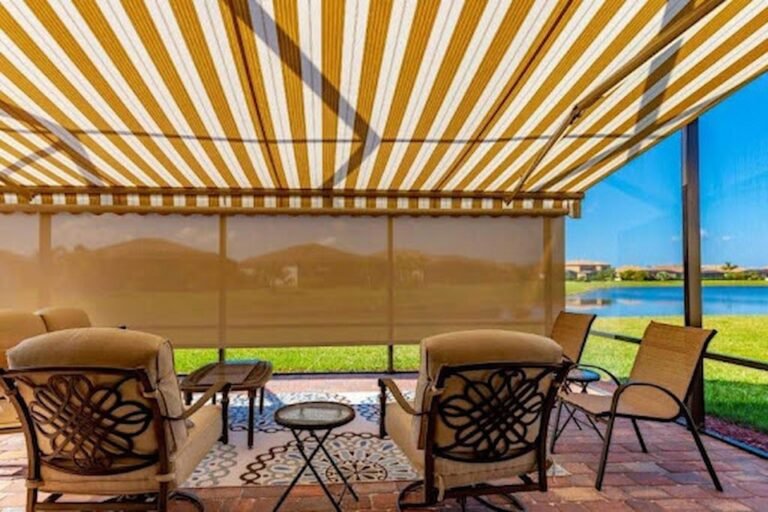
Awnings work by controlling how much sunlight and weather reach outdoor areas. By providing consistent shade and partial shelter, they reduce direct exposure to damaging elements. This creates a more stable environment around furniture, limiting stress on materials and slowing the ageing process caused by constant weather variation.
Blocking Harmful UV Rays While Preserving Light
Modern awning fabrics are designed to filter out a high percentage of UV rays without blocking natural daylight completely. This balance allows outdoor spaces to remain bright and comfortable while significantly reducing sun-related damage. Furniture placed beneath awnings benefits from protection without losing the open feel of outdoor living.
Reducing Rain and Moisture Contact
Moisture does not need to be heavy or prolonged to cause damage. Repeated exposure to light rain, condensation, and damp conditions can weaken joints, promote corrosion, and encourage mould growth. Awnings limit how often furniture becomes wet, reducing moisture absorption and helping materials dry more evenly.
Managing Temperature Fluctuations
Outdoor furniture experiences constant temperature changes, particularly when exposed to direct sun followed by shade or rain. These fluctuations cause materials to expand and contract, placing strain on joints and finishes. Awnings moderate surface temperatures, reducing thermal stress and helping furniture retain its shape and structural integrity.
Slowing Fading, Cracking, and Surface Breakdown
Colour fading and surface cracking often signal deeper material damage. By reducing direct sun exposure, awnings slow pigment breakdown and protect surface finishes. Furniture maintains its appearance for longer, reducing the need for refinishing or premature replacement and supporting long-term visual consistency.
Protecting Cushions and Soft Furnishings
Cushions and fabric elements are especially vulnerable outdoors. Heat, moisture, and UV exposure weaken fibres and shorten usable life. Awnings provide shade that helps cushions remain cooler and drier, supporting fabric durability and reducing odour, staining, and structural breakdown over time.
Limiting Dirt, Debris, and Environmental Build-Up
Airborne dust, pollen, and debris settle on outdoor furniture daily. Over time, these particles abrade surfaces and embed into fabrics. Awnings act as a partial shield, reducing debris accumulation and lowering the frequency of intensive cleaning that can contribute to wear.
Lowering Maintenance and Ongoing Care Demands
Furniture that is better protected requires less aggressive cleaning and fewer protective treatments. Reduced exposure means finishes last longer and materials remain more stable. This lighter maintenance cycle helps preserve furniture condition while saving time and effort across seasons.
Extending Usability Throughout the Year
Awnings make outdoor furniture usable across a wider range of conditions. Shaded areas remain comfortable in warmer weather, while light rain protection allows continued use during unsettled conditions. This consistent usability supports better care habits and reduces unnecessary exposure or storage-related damage.
Why Domestic Awnings Are a Practical Investment
Domestic awnings offer long-term value by preventing avoidable deterioration of outdoor furniture. By reducing exposure to the most damaging environmental factors, they help preserve materials, maintain appearance, and extend furniture lifespan. This preventative approach supports both comfort and cost efficiency over time.
Protecting Furniture Without Compromising Outdoor Design
Awnings can be integrated into residential spaces without disrupting overall design. With a range of styles and finishes available, they enhance outdoor areas while delivering practical protection. This balance ensures furniture remains protected without sacrificing the visual appeal of outdoor living spaces.
Conclusion
Outdoor furniture is constantly exposed to conditions that accelerate wear, from sunlight and rain to temperature shifts and airborne debris. Awnings reduce this exposure by creating a more controlled outdoor environment, helping furniture retain its strength, appearance, and comfort. Domestic awnings lower maintenance demands, extend furniture lifespan, and improve everyday usability of outdoor spaces. For homeowners seeking to protect their outdoor investment effectively, awnings provide a reliable and long-lasting solution that supports both function and visual appeal.